Looking for a gift that makes a difference? > Adopt a Lobster!
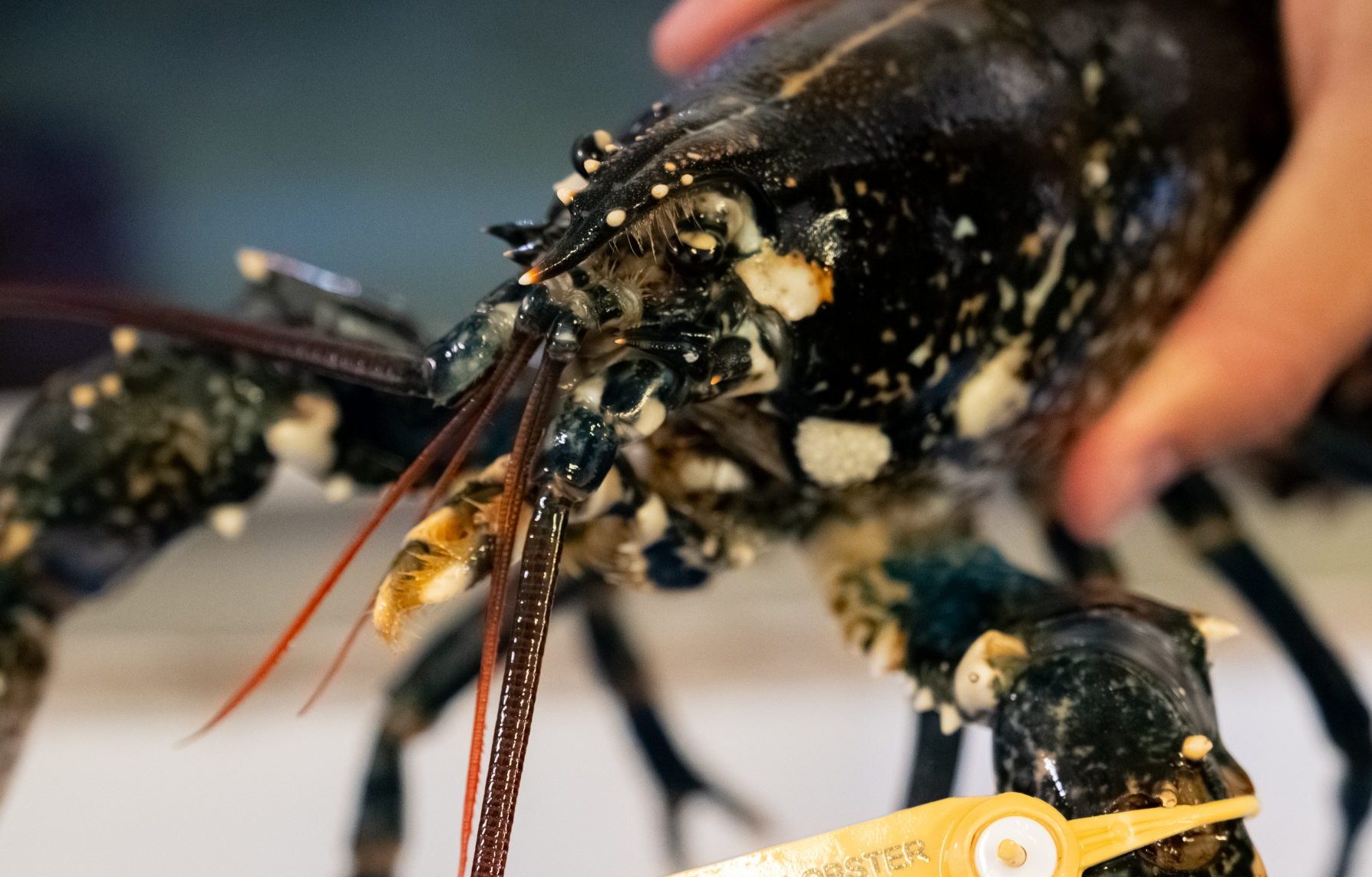
Are Britain’s native lobsters in trouble? Discover what the science tells us about European lobster populations, fishing pressure and the importance of protecting their marine habitats.
The European lobster (Homarus gammarus) is one of the most recognisable inhabitants of Britain’s coastal waters.
With powerful claws, impressive armour and a remarkable lifecycle, it’s an extraordinary marine species. It also supports fishing communities and coastal economies around the UK.
But how healthy are our wild lobster populations? And what threats do they face?
The answer is more complex than you might expect.
European lobsters remain widespread across the northeastern Atlantic, including British coastal waters. However, a species can be widespread while individual populations face significant pressure.
For commercially important species such as lobsters, scientists examine the condition of local fishery stocks as well as the broader conservation status of the species.
The UK government’s Crab and Lobster Fisheries Management Plan, published in 2023, identified high levels of exploitation in English crab and lobster fisheries.
The evidence suggested that fishing pressure could exceed the levels needed to maintain stocks at maximum sustainable yield: the level of fishing intended to deliver long-term catches without compromising a stock’s productive capacity.
However, the report also acknowledged substantial gaps and uncertainties in the available evidence.
So, while it’s misleading to suggest that all UK lobster populations are disappearing, there are good reasons to strengthen their protection.
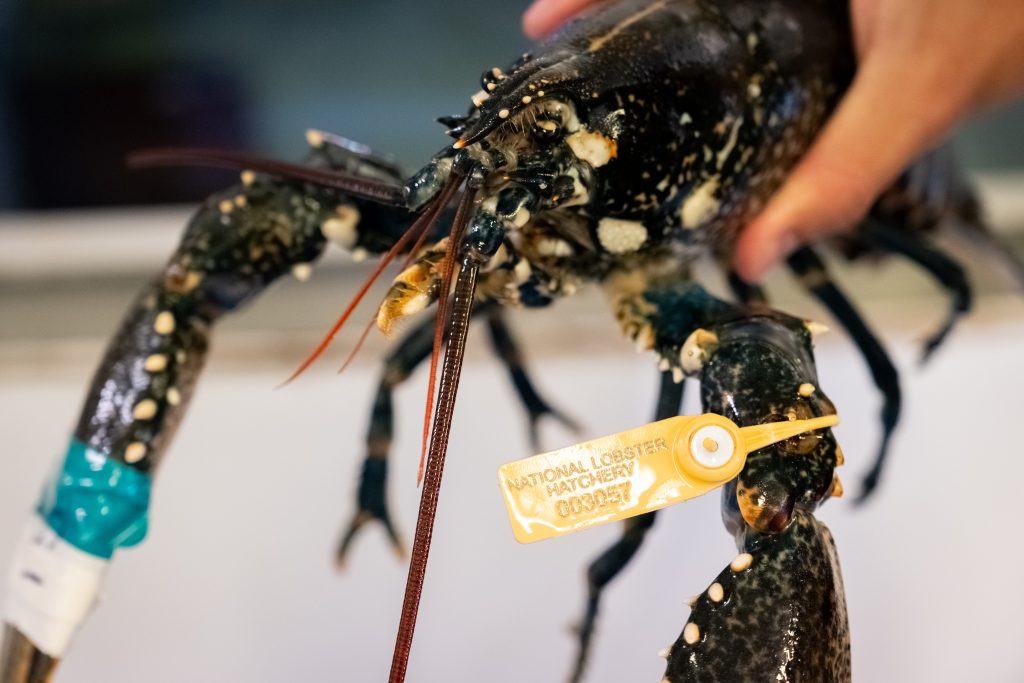
Photo credit: Gabe Somers
European lobsters are a valuable commercial species, generally caught using baited pots.
When fishing removes lobsters faster than populations can replace them, the number of breeding adults may decline.
This is particularly important for a relatively slow-growing species that can take several years to reach reproductive maturity.
Scientists at the Centre for Environment, Fisheries and Aquaculture Science (CEFAS) assess regional lobster stocks using information about catches, fishing activity and lobster biology.
These assessments help fisheries managers understand the condition of stocks and where additional protection may be needed.
European lobster reproduction is a fascinating process.
Female lobsters carry fertilised eggs attached beneath their tails, often for around nine months before hatching.
Known as berried hens, these females may carry thousands of developing eggs. However, producing large numbers of offspring doesn’t guarantee that many will survive.
After hatching, lobster larvae are thought to spend their earliest stages drifting in the water column, where they face natural predators and changing environmental conditions.
Following several moults, surviving larvae develop into small, lobster-shaped juveniles and begin life on the seabed.
This transition from planktonic larva to seabed-dwelling juvenile is a particularly vulnerable stage.
Discover more in our guide to European lobster biology.
Protecting lobsters also means protecting the places they live.
Adult European lobsters favour rocky seabed habitats, where crevices and other sheltered spaces provide protection. Young lobsters also depend on suitable seabed conditions as they settle and establish themselves.
Changes to habitat quality, sedimentation and other environmental pressures can affect the conditions that support survival and recruitment.
Climate change may also influence lobster populations by altering sea temperatures and marine ecosystems. However, the effects vary between regions and are still being investigated.
Understanding these ecological relationships is an important part of effective marine conservation.
Measuring wild lobster populations isn’t straightforward. Unlike animals that can be counted easily, lobsters spend much of their lives hidden among rocks and seabed habitats.
Scientists therefore use several types of evidence:
Each method provides part of the picture.
For example, a rise in landings doesn’t necessarily mean a population has grown. Catches can also change because of fishing effort, environmental conditions or how readily lobsters enter pots.
This is why scientific monitoring and collaboration with fishing communities are so valuable.
Maintaining healthy breeding populations is essential to the long-term sustainability of lobster fisheries.
Larger, mature female lobsters can produce substantial numbers of eggs, but egg production is only the beginning of the story. For a population to remain healthy, enough offspring must also survive and eventually become reproducing adults.
This process is known as recruitment.
Protecting breeding females, allowing younger lobsters to mature and maintaining suitable habitats all help support the conditions needed for future generations.
Lobster conservation isn’t simply about restricting fishing. It’s about understanding how fisheries and marine ecosystems can remain productive over the long term.
Scientists, fishing communities, regulators and conservation organisations all have a role to play.
At The National Lobster Hatchery, our work combines research, education and practical conservation to improve our understanding of this remarkable species.
And that work begins with a simple principle: to protect a species effectively, we first need to understand its biology and the pressures it faces.
Understanding the challenges is only part of the story. Across the UK, fisheries regulations and conservation programmes are helping protect breeding lobsters and supporting future populations.
Next in our series: How Are Lobster Populations Protected in the UK? We explore the laws, size limits and fisheries management measures designed to safeguard Britain’s native lobsters.
European lobsters remain widespread in UK waters, but some regional stocks face high fishing pressure. The condition of individual fisheries should not be confused with the conservation status of the species as a whole.
Fishing pressure is a major management concern for exploited UK lobster stocks. Habitat changes, environmental conditions and the survival of young lobsters also influence population health.
European lobsters take several years (typically 5-7 years) to reach reproductive maturity. The exact age and size vary depending on environmental conditions, individual development and location.