The doors are back open, the pumps are humming, and thousands of tiny lobster larvae are once again drifting through the hatchery systems at the National Lobster Hatchery.
After three months of winter renovations, rebuilds and behind-the-scenes engineering, the Hatchery has officially returned to peak hatching season — and just in time for another busy year caring for berried hens and the next generation of baby lobsters.
For the team, winter is never truly “quiet”. While Cornwall’s coastline slows down during the colder months, the Hatchery enters one of its most important phases of the year: a carefully coordinated period of maintenance, innovation and improvement that helps prepare the site for the intense demands of spring and summer production.
This year’s winter works, however, were among the most ambitious yet.
From immersive visitor centre upgrades to major hatchery system improvements and the launch of a pioneering new Crab Lab project, Winter 2025/26 has helped shape a smarter, more efficient and more engaging future for the Hatchery — all before the first baby lobsters of the season even hatched. And now, with berried hens arriving and larval tanks rapidly filling up, the timing could not have been better.
Returning visitors will immediately notice that the Hatchery looks a little different this season.
Over the winter closure period — from mid-November until reopening for Valentine’s Day — the visitor centre underwent a substantial refresh. A new floor was installed, repairs were completed throughout the space, and the team took the opportunity to rethink how Cornwall’s marine habitats are represented within the aquarium displays.
The result is a visitor experience that feels more immersive, more ecological and more connected to the wild environments juvenile lobsters depend upon once released. The redesigned tanks now reflect several important marine habitats found around the Cornish coast, including kelp forests, seagrass meadows, rocky reefs and rock pools. Each habitat supports a rich network of marine biodiversity and plays a critical ecological role in coastal ecosystems.
Seagrass meadows, for example, are internationally recognised as powerful carbon sinks and nursery habitats for juvenile fish and invertebrates. Kelp forests support highly productive food webs while helping buffer coastlines against wave energy. Rocky reefs and intertidal rock pools provide shelter and feeding grounds for countless marine organisms — including many species important to Cornwall’s fisheries.
For a conservation hatchery, these habitats are more than just scenery. They are the environments that support the survival of species like the European lobster long after release. The new displays also reflect how the Hatchery’s role has evolved over time. Around 10% of visitors are now return guests, meaning many people are coming back specifically to follow the Hatchery’s progress and deepen their understanding of marine conservation.
And there is one entirely new addition already proving popular with visitors: the “Lobster Cinema”.
Part education space, part storytelling hub, the newly installed cinema room offers visitors an opportunity to dive deeper into hatchery science, lobster biology and fisheries conservation through immersive visual content. It also gives the team a dedicated space to communicate the science behind their work in a more engaging and accessible way.
Because sometimes the best way to explain larval rearing systems is with giant lobster footage on a big screen.
While the visitor centre upgrades are immediately visible, some of the most significant changes happened behind closed hatchery doors.
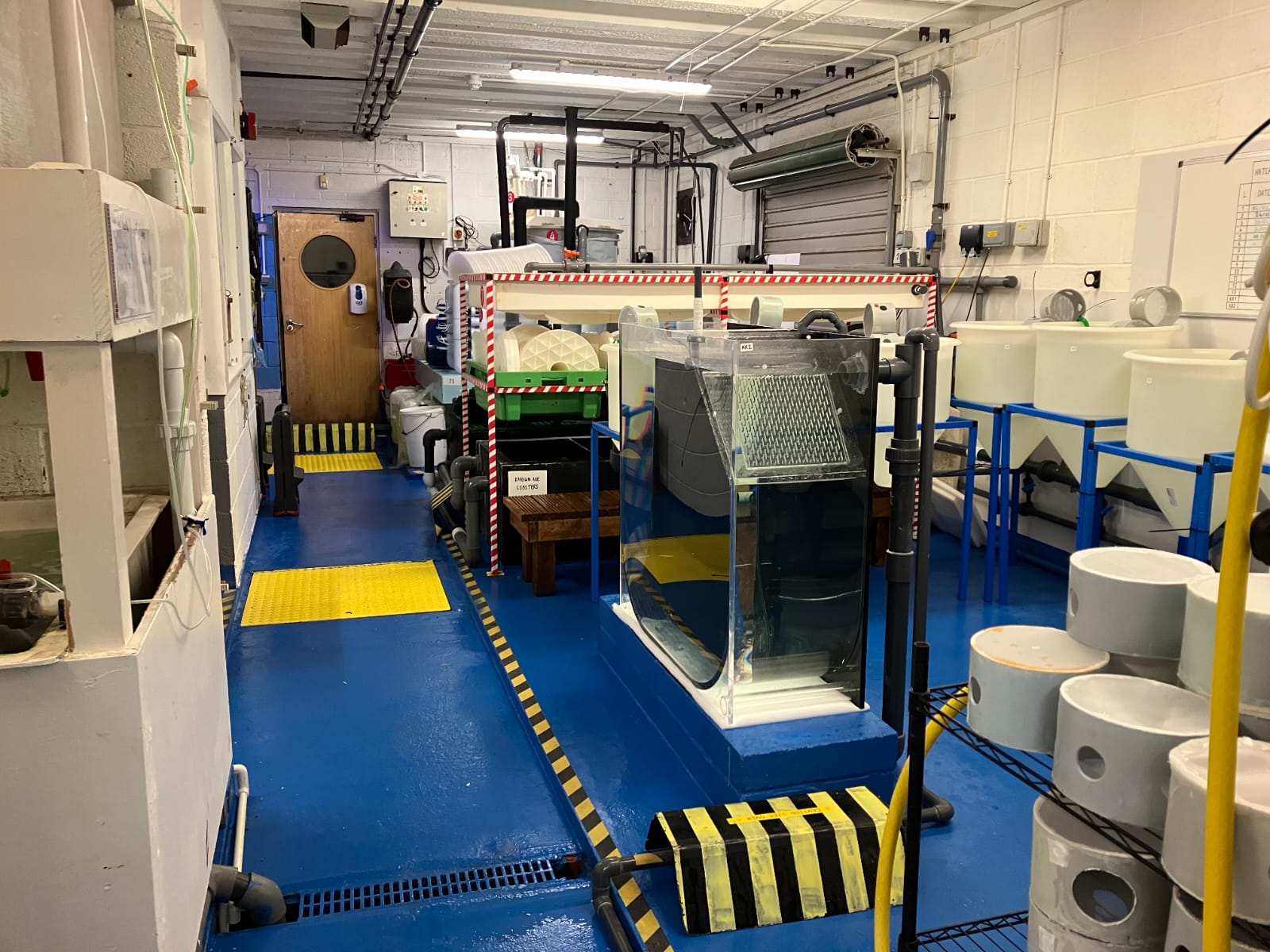
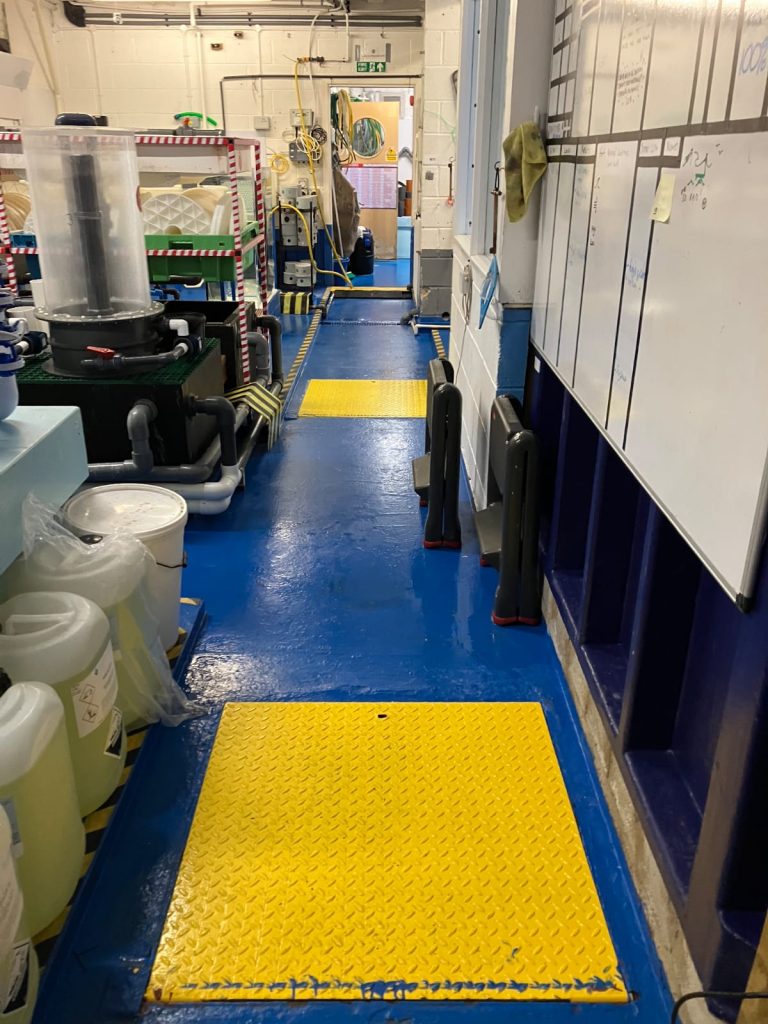
Throughout the winter closure, the hatchery team completely dismantled and rebuilt core operational systems — stripping equipment apart, deep cleaning components and redesigning layouts to improve efficiency, sustainability and animal welfare ahead of peak production. Now, with berried hens arriving carrying thousands of fertilised eggs beneath their tails, those improvements are already being put to work.
“It was cool to have the time to really strip things back properly,” said Chris from the Hatchery team. “We were able to make changes we’d wanted to do for a long time but couldn’t while we were in production.”
The timing of winter renovations is crucial. During spring and summer, the Hatchery operates at full capacity as eggs hatch into free-swimming larvae that require constant care and monitoring. Large-scale engineering work simply is not possible once hatching season begins.
One major focus this winter was improving the hatchery cone systems used during larval culture. The stands supporting the cones were recovered and reinforced, while the cones themselves were upgraded with protective taping to improve stability and reduce the risk of spillages. It may not sound glamorous, but in hatchery science, preventing a cone wobble at the wrong moment is very important.
The hatchery layout was also reorganised to improve workflow and maximise space efficiency. Impressively, the upgraded systems now operate using just two pumps instead of four, significantly reducing energy usage while simplifying maintenance demands.
These changes also improve practical biosecurity — a key aspect of hatchery management. More streamlined systems reduce unnecessary handling and minimise stress for both berried hens and developing larvae.
For animals already investing enormous amounts of energy into reproduction, lower-stress environments can make a significant difference.
As Theo described it, the work has all been part of “Building forward for the future”.
Among the most exciting developments this winter has been the arrival of the Hatchery’s brand-new Crab Lab.
Led by Head of Production, Ben Marshall, and supported through an innovation grant from Sea Changers, the project explores the feasibility of brown crab hatchery culture — an area of marine science where many fundamental questions remain unanswered. Brown crabs are one of the UK’s most economically important shellfish species, yet surprisingly little is understood about aspects of their reproductive biology and larval development.
Unlike lobster culture, where decades of hatchery knowledge exist internationally, there is currently no established blueprint for successfully rearing brown crabs in a hatchery environment. Which, scientifically speaking, is both exciting and mildly terrifying.
“We’re still in the very early days,” explains Ben. “One of the biggest challenges is sourcing berried crabs carrying eggs. We do see berried crabs in Cornwall, but not frequently, and there’s still a lot we don’t fully understand about their breeding cycle.”
Questions remain around fertilisation timing, broodstock condition and how moulting cycles influence reproduction. Even related species like spider crabs demonstrate highly seasonal reproductive patterns, typically moulting and mating during late spring and early summer.
But that uncertainty is exactly what makes the Crab Lab important.
Marine conservation innovation rarely starts with certainty. It starts with curiosity, experimentation and a willingness to investigate the unknown. By exploring these early-stage questions now, the Hatchery hopes to contribute valuable scientific knowledge that may one day support more sustainable shellfish fisheries in the future.

Now fully reopened and operating at peak season capacity, the National Lobster Hatchery is entering another busy year of hatching, rearing and releasing juvenile lobsters into Cornish waters.
Behind every berried hen, every larval tank and every tiny juvenile lobster is a huge amount of unseen preparation — months of planning, maintenance, engineering and teamwork that make successful conservation hatchery operations possible.
Thanks to the support of visitors, members and partners — and the dedication of the Hatchery team — the site continues to evolve both scientifically and operationally.
From immersive habitat displays and the Lobster Cinema to upgraded hatchery systems and pioneering crab research, this winter’s renovations have helped create a stronger foundation for the future of marine conservation in Cornwall.
And now the baby lobsters are back.
Thousands of them.