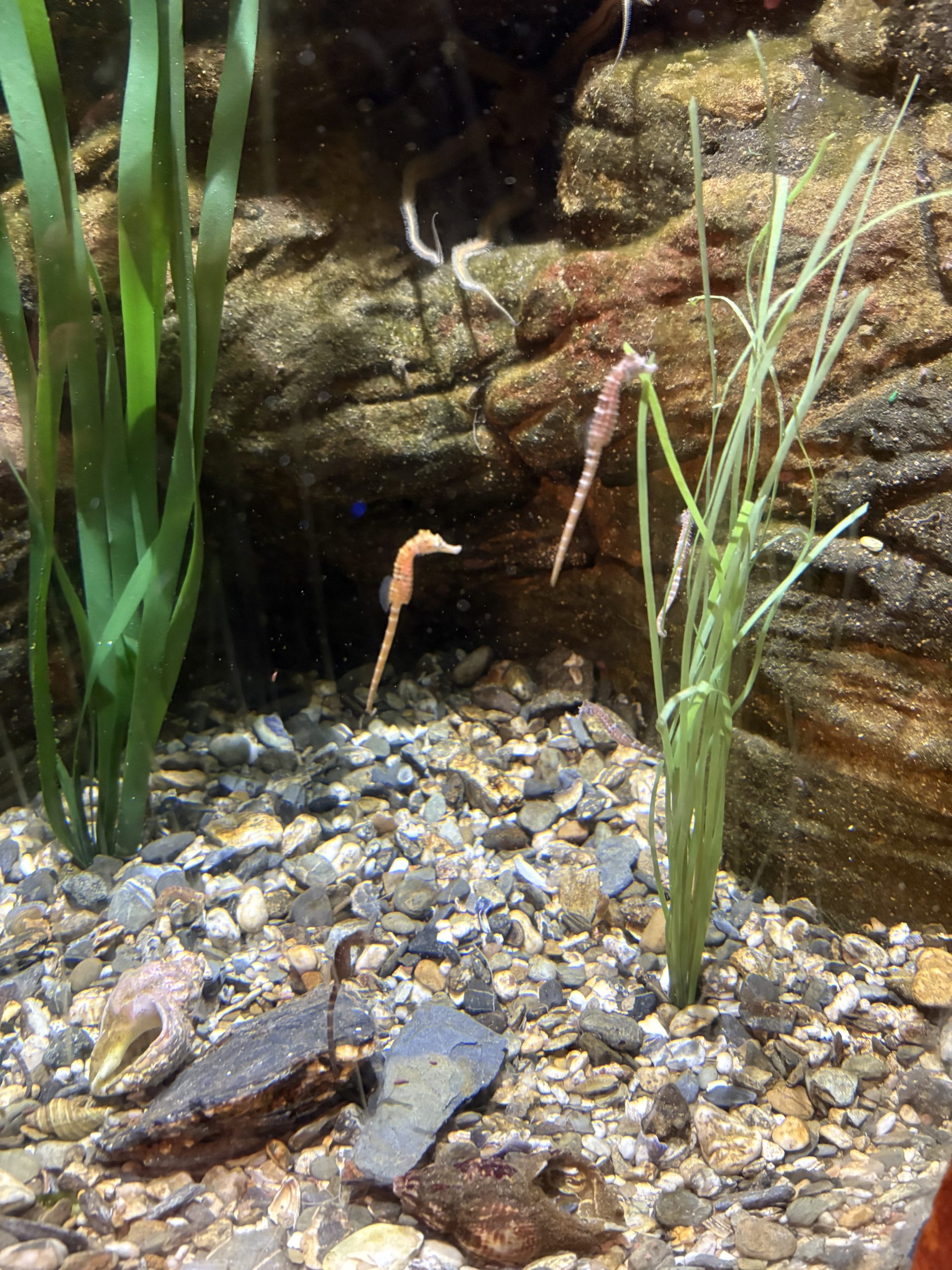
This year, the National Lobster Hatchery is welcoming some very special new arrivals from our friends at Blue Reef Aquarium, Newquay.
With their curled tails, horse-like heads and graceful drifting movements, they seem more like creatures from mythology than fish found in our oceans. This year, visitors to the National Lobster Hatchery will have the opportunity to meet some remarkable new residents — big-bellied seahorses from New Zealand — and discover how these fascinating animals help tell a much bigger story about Cornwall’s underwater world.
While seahorses may appear very different from lobsters at first glance, they are more connected than you might think. Both species depend on healthy coastal habitats to survive, and both are ambassadors for the fragile marine ecosystems that support an incredible diversity of life around the Cornish coast.
At the National Lobster Hatchery (NLH), conservation has always been about more than a single species. For 25 years, the hatchery has worked to support vulnerable European lobster populations in UK waters through its pioneering stock enhancement programme. By hatching and releasing juvenile European lobsters into local seas, the charity helps strengthen wild populations and support healthier marine ecosystems for future generations.
Now, with the arrival of the seahorses, the hatchery is expanding that conversation even further.
The big-bellied seahorse (Hippocampus abdominalis) is native to the coastal waters of New Zealand and southern Australia. As one of the largest seahorse species in the world, they are captivating animals that immediately spark curiosity and conversation.
But their role at the hatchery is about far more than simply being eye-catching.
These seahorses share similar biology and habitat preferences with our own native UK seahorse species, which are considered vulnerable and protected under UK law. Both native species — the short-snouted seahorse and the spiny seahorse — rely heavily on healthy seagrass meadows and sheltered coastal habitats.
By introducing visitors to the big-bellied seahorse, the NLH hopes to inspire greater understanding of the challenges faced by marine species closer to home.
Seahorses are also an excellent example of how interconnected marine ecosystems truly are.
Like juvenile lobsters, seahorses thrive in sheltered coastal nursery habitats. Their survival depends on healthy underwater environments that provide food, protection and places to hide from predators. Damage to these habitats doesn’t just affect one species — it impacts entire ecosystems.
That is why this year, the hatchery’s displays have been carefully curated to highlight some of Cornwall’s most important marine habitats and ecosystems, showcasing the incredible relationships between species living beneath the waves.
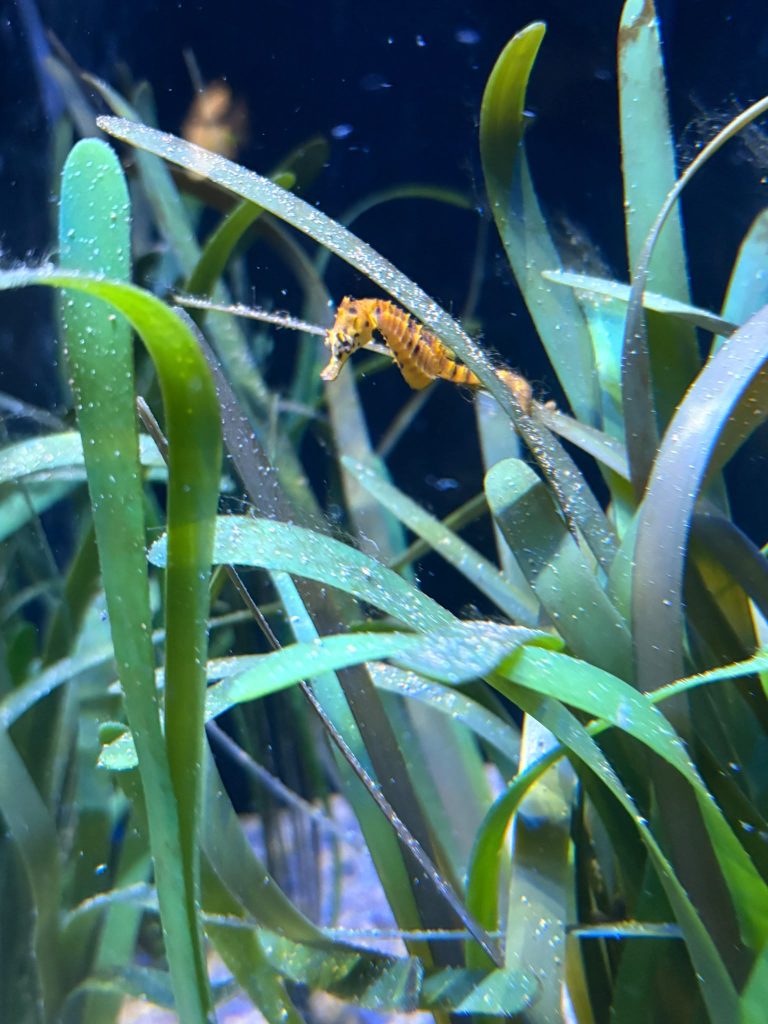

Photo credit: National Lobster Hatchery / Gabe Somers
One of the most important habitats featured at the hatchery this year is seagrass.
Although often overlooked, seagrass meadows are among the most valuable marine habitats in the world.
Unlike seaweed, seagrass is actually a flowering marine plant. It grows in shallow coastal waters, creating vast underwater meadows that support an astonishing variety of life.
For seahorses, seagrass provides the perfect home. Their prehensile tails allow them to anchor themselves to the blades of grass while they wait for tiny shrimp and plankton to drift past.
But seahorses are only one part of the story.
Seagrass habitats also act as vital nurseries for young marine life. Baby fish shelter among the blades, protected from predators while they grow. Species including cod, pollock and bass all use seagrass meadows during important stages of their life cycle.
Juvenile lobsters benefit from these ecosystems too, particularly in coastal areas where seagrass helps create rich, biodiverse habitats.
One of the most exciting things about seagrass is that some of the UK’s largest meadows — and indeed some of the largest in Europe — can be found right here off the Cornish coast.
Recent discoveries in areas including St Austell Bay and Mount’s Bay have revealed extensive seagrass beds that are hugely important for biodiversity and climate resilience.
These habitats do more than support marine wildlife. Seagrass also captures and stores significant amounts of carbon, improves water quality, stabilises sediments and even helps reduce coastal erosion.
Protecting seagrass means protecting entire marine communities.
One of the most exciting aspects of marine conservation is understanding how connected ocean life really is.
Every species plays a role.
Lobsters shelter in rocky habitats and contribute to healthy seabed ecosystems. Seahorses rely on calm, sheltered seagrass meadows. Fish move between habitats throughout different stages of their lives. Tiny plankton support larger predators higher up the food chain.
When one habitat is damaged, the effects ripple across the ecosystem.
This interconnectedness sits at the heart of the hatchery’s education and outreach work.
By showcasing habitats such as seagrass meadows, rocky reefs and kelp forests, the NLH hopes to help visitors better understand the hidden complexity of Cornwall’s marine environment and why protecting biodiversity matters.
Ocean literacy and public engagement are increasingly important tools in marine conservation.
When people connect emotionally with marine life — whether through a lobster release, spotting a seahorse or learning about underwater ecosystems — they are more likely to value and protect our seas.
That sense of wonder can be incredibly powerful.
Seahorses may be small, but they are packed with surprises!
The arrival of seahorses at the National Lobster Hatchery represents an exciting new chapter for the charity.
It is an opportunity to celebrate the extraordinary marine life found around our coasts while shining a spotlight on the habitats that support it.
For the NLH team, conservation is about understanding connections — between species, habitats, fisheries, communities and future generations.
By protecting underwater ecosystems like seagrass meadows, we help support not only seahorses and lobsters, but countless other marine species that depend on healthy seas.
And perhaps most importantly, we inspire more people to fall in love with the ocean.
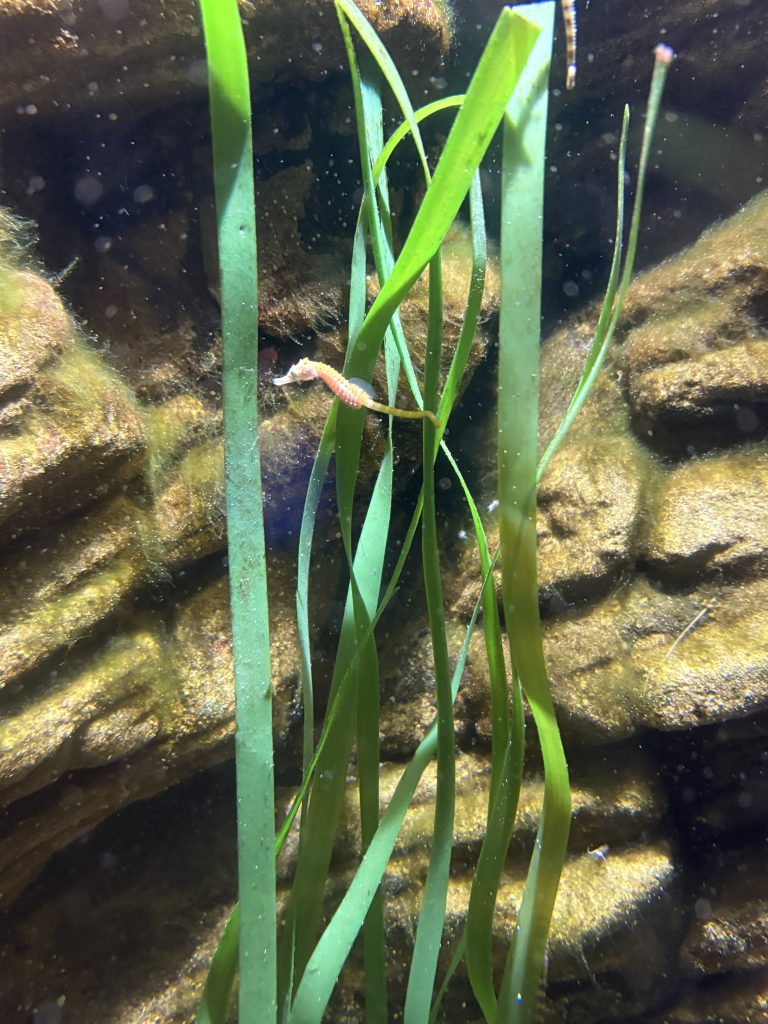
Photo credit: National Lobster Hatchery